

BDC General Anatomy: Complete Guide for MBBS Students

Sayanti Chakrabarti

General Anatomy is the foundation on which the rest of first-year Anatomy is built. Before studying the upper limb, thorax, abdomen, head and neck or neuroanatomy, MBBS students need to understand the basic principles that describe how the human body is organized.
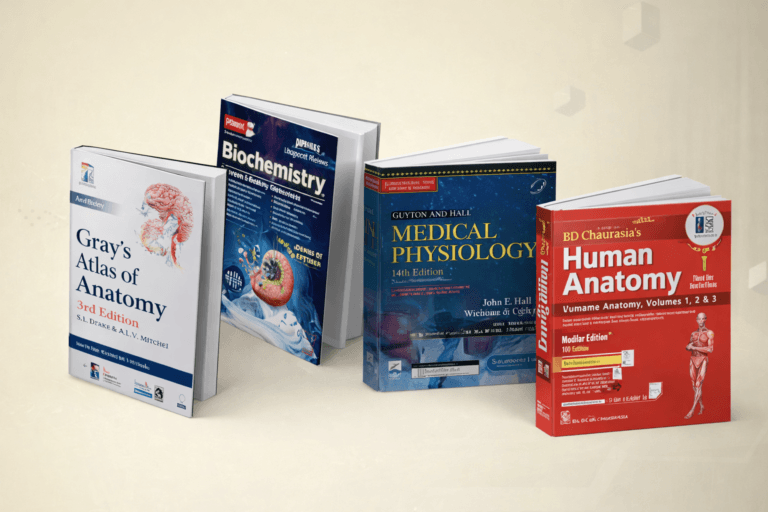
For many Indian medical students, BDC General Anatomy refers to the introductory concepts covered in BD Chaurasia’s Human Anatomy. These chapters introduce the terminology, structural organization and fundamental concepts needed to understand regional and clinical anatomy.
But General Anatomy should not be treated as a chapter to memorize before university examinations. It provides a language and conceptual framework for understanding the entire human body.
Quick answer: BDC General Anatomy is an important starting point for MBBS Anatomy. Students should focus on anatomical terminology, planes and movements, tissues, bones, joints, muscles, blood vessels, nerves and lymphatics, while connecting each concept with regional and clinical anatomy.
What Is General Anatomy?
General Anatomy deals with the basic principles of human body structure before students study individual regions in detail.
It helps answer questions such as:
- How is the body organized?
- What are anatomical positions and planes?
- How are bones classified?
- How are joints structured?
- How do muscles produce movement?
- How are arteries and veins organized?
- How do peripheral nerves travel?
- How does lymphatic drainage occur?
Understanding these principles makes later Anatomy topics considerably easier.
Why Is BDC General Anatomy Important for MBBS?
Students sometimes underestimate General Anatomy because it appears simpler than regional anatomy.
In reality, these concepts repeatedly appear throughout medical education.
For example:
Anatomical planes help with radiology and imaging.
Muscle attachments and actions become important in orthopedics and clinical examination.
Nerve organization becomes essential in neurology, anesthesia and surgery.
Blood supply is fundamental to surgery, pathology and wound healing.
Lymphatic drainage becomes relevant to oncology and clinical examination.
Therefore, General Anatomy isn’t merely introductory theory—it establishes a framework that continues into clinical subjects.
Important Topics in BDC General Anatomy
Although exact organization can vary by edition, MBBS students should develop a strong understanding of the following areas.
1. Anatomical Position and Terminology
The standard anatomical position provides a universal reference point for describing structures.
Students should understand terms such as:
- Superior and inferior
- Anterior and posterior
- Medial and lateral
- Proximal and distal
- Superficial and deep
- Internal and external
These terms may seem basic, but they are used constantly in Anatomy and clinical medicine.
Study Tip
Don’t memorize terminology as isolated definitions. Use diagrams and apply each term to actual anatomical structures.
2. Anatomical Planes and Sections
Students should know:
- Sagittal plane
- Median plane
- Coronal plane
- Transverse plane
- Oblique sections
These concepts are particularly important when interpreting CT scans, MRI images and anatomical diagrams.
A good understanding of planes also improves three-dimensional visualization.
3. Movements of the Body
General Anatomy introduces common movements including:
- Flexion
- Extension
- Abduction
- Adduction
- Rotation
- Circumduction
- Supination
- Pronation
- Inversion
- Eversion
Understanding movement becomes particularly useful when studying muscles, joints and clinical examination.
4. Tissues and Basic Structural Organization
Students should understand the basic organization of:
- Epithelial tissue
- Connective tissue
- Muscle tissue
- Nervous tissue
This creates an important connection between Anatomy and Histology.
The goal isn’t simply to memorize classifications. Students should understand how tissue structure supports function.
5. Bones and Skeletal System
General Anatomy provides the principles required to study bones systematically.
Important concepts include:
Classification of Bones
- Long bones
- Short bones
- Flat bones
- Irregular bones
- Sesamoid bones
Parts of a Typical Long Bone
Students should recognize structures such as:
- Shaft
- Epiphysis
- Metaphysis
- Periosteum
- Medullary cavity
- Articular cartilage
Understanding these principles makes regional osteology easier later.
6. Joints
General Anatomy introduces the classification and structural organization of joints.
Students should understand:
- Fibrous joints
- Cartilaginous joints
- Synovial joints
For synovial joints, focus on:
- Articular surfaces
- Joint capsule
- Synovial membrane
- Synovial fluid
- Ligaments
- Movements
This knowledge becomes essential when studying clinical conditions involving joints and musculoskeletal injuries.
7. Muscles
Muscles should be studied through structure, attachment, action and nerve supply.
A useful framework is:
Origin → Insertion → Action → Nerve supply → Clinical relevance
Understanding this framework makes regional muscle anatomy much easier.
Avoid trying to memorize long muscle lists without understanding anatomical relationships.
8. Arteries, Veins and Blood Supply
General Anatomy introduces the basic principles of vascular organization.
Students should understand:
- Arteries
- Arterioles
- Capillaries
- Venules
- Veins
- Anastomoses
- End arteries
The concept of anastomosis is particularly important because it helps explain collateral circulation and tissue blood supply.
9. Peripheral Nerves
Nerve anatomy can initially appear complicated, but General Anatomy provides the basic framework.
Learn:
- Motor nerves
- Sensory nerves
- Mixed nerves
- Peripheral nerve structure
- Nerve plexuses
- Dermatomes
A strong foundation here makes later topics such as the brachial plexus, lumbosacral plexus and cranial nerves easier to understand.
10. Lymphatic System
The lymphatic system is another high-value General Anatomy topic.
Students should understand:
- Lymphatic vessels
- Lymph nodes
- Lymphatic drainage
- Major lymphatic pathways
- Clinical importance of lymph nodes
This becomes particularly relevant when studying infection, inflammation and cancer spread.
BDC General Anatomy and Clinical Correlation
Modern medical education increasingly emphasizes connecting basic sciences with clinical practice.
General Anatomy supports clinical understanding through concepts such as:
Nerve Injuries
Understanding nerve pathways helps explain motor and sensory deficits.
Fractures
Knowledge of bone structure and nearby vessels or nerves helps explain complications.
Joint Injuries
Understanding joint anatomy provides the foundation for interpreting dislocations and ligament injuries.
Lymphatic Spread
Knowledge of lymphatic drainage helps explain how certain cancers spread through regional lymph nodes.
Radiology
Understanding anatomical planes improves interpretation of CT and MRI images.
This is why students should study General Anatomy as applied anatomy, rather than as a collection of definitions.
How to Study BDC General Anatomy Effectively
A structured approach can make the subject much easier.
Step 1: Understand the Concept
Read the topic carefully instead of immediately memorizing it.
Step 2: Draw It
Use diagrams for:
- Planes
- Movements
- Joints
- Blood vessels
- Nerves
Step 3: Connect It to Regional Anatomy
After learning a principle, identify where it appears in the upper limb, thorax, abdomen or another region.
Step 4: Add Clinical Correlation
Ask:
“Where is this concept used clinically?”
Step 5: Practice Active Recall
Close the textbook and explain the topic in your own words.
Step 6: Revise Regularly
General Anatomy concepts recur throughout the MBBS curriculum, so spaced revision is more effective than one-time memorization.
Common Mistakes MBBS Students Should Avoid
Treating General Anatomy as Low Priority
These concepts become the foundation for regional Anatomy.
Memorizing Without Diagrams
Anatomy is fundamentally visual.
Ignoring Clinical Applications
Clinical connections make concepts easier to remember.
Using Too Many Textbooks
Choose one primary textbook and supplement it selectively.
Skipping Practical Learning
Textbook knowledge should be connected with specimens, models, dissection and imaging whenever possible.
Is BDC General Anatomy Enough for MBBS?
BDC can serve as a strong primary source for undergraduate Anatomy, but no textbook should be studied in isolation.
For a well-rounded first-year Anatomy strategy, consider:
BD Chaurasia + Anatomy Atlas + Practical/Dissection Sessions + Lecture Notes + Revision Questions
An atlas can improve three-dimensional visualization, while practical sessions help students identify structures in real specimens or models.
Your medical college’s current curriculum and department recommendations should determine which specific editions and supplementary resources you use.
BDC General Anatomy Study Strategy for Exams
For university examinations, prioritize:
- Definitions
- Classifications
- Important diagrams
- Anatomical terminology
- Applied anatomy
- Frequently tested concepts
- Short notes
- Viva questions
However, don’t reduce General Anatomy to an examination checklist.
The concepts learned here should be carried forward into regional anatomy and eventually clinical subjects.
Frequently Asked Questions
What is BDC General Anatomy?
BDC General Anatomy refers to the foundational Anatomy concepts presented in BD Chaurasia’s Human Anatomy, including anatomical terminology, planes, movements, tissues, bones, joints, muscles, vessels, nerves and lymphatics.
Is General Anatomy important for MBBS?
Yes. General Anatomy provides the terminology and structural concepts needed to understand regional Anatomy, radiology, surgery and other clinical disciplines.
Which topics should I study first in General Anatomy?
Start with anatomical position and terminology, planes and movements. Then progress to tissues, bones, joints, muscles, blood vessels, nerves and lymphatics.
Is BD Chaurasia good for MBBS Anatomy?
Yes. BD Chaurasia is a widely used undergraduate Anatomy resource. Students can supplement it with an atlas, practical manual and their institution’s teaching materials.
Do I need an atlas with BDC?
An atlas is highly useful because it provides detailed visual representations and helps develop three-dimensional understanding.
How can I remember General Anatomy concepts?
Use diagrams, active recall, spaced revision and clinical correlations instead of relying solely on repeated reading.
Final Verdict
BDC General Anatomy is more than an introductory section of an Anatomy textbook—it is the conceptual foundation for first-year MBBS Anatomy.
Students who understand anatomical terminology, planes, movements, bones, joints, muscles, vessels, nerves and lymphatics will find regional Anatomy considerably easier.
The most effective strategy is not to memorize every line. Instead:
Understand → Visualize → Draw → Apply → Revise
Use BD Chaurasia as a primary learning resource, complement it with an appropriate atlas and practical exposure, and consistently connect General Anatomy concepts with clinical applications.
For an MBBS student, mastering General Anatomy early can make the transition from basic anatomical theory to complex regional and clinical Anatomy much smoother.