

Best Community Health Nursing Books for B.Sc Nursing Students

admin
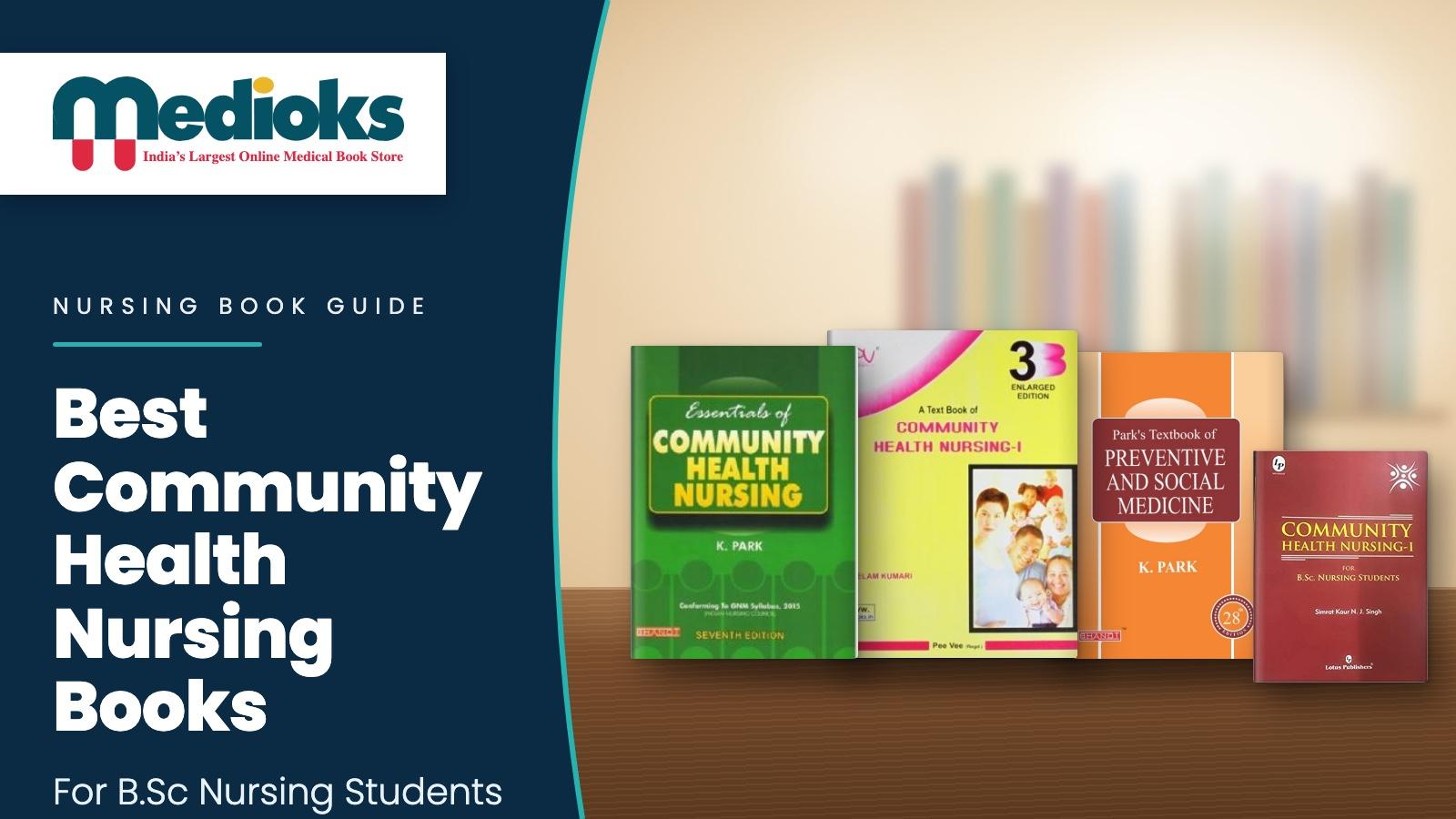
For community health nursing, K. Park’s Essentials of Community Health Nursing is the most widely used reference, and many B.Sc Nursing students pair it with a syllabus-based Indian textbook such as Neelam Kumari’s Textbook of Community Health Nursing I or K.K. Gulani’s Community Health Nursing: Principles and Practices. Park’s Textbook of Preventive and Social Medicine is the standard reference for epidemiology and national health programmes.
Community health nursing prepares nurses to promote health and prevent disease in families and communities, not just in hospitals. It covers primary health care, epidemiology, national health programmes, maternal and child health, home visits and health education. In B.Sc Nursing, it’s taught as Community Health Nursing I and II, with community postings in rural and urban areas. This guide compares the main books and explains how to study the subject.
Quick answer
- Main reference: Essentials of Community Health Nursing (K. Park).
- Syllabus-based textbooks: A Textbook of Community Health Nursing I for B.Sc Nursing (Neelam Kumari, as per INC syllabus) and Community Health Nursing I for B.Sc Students (Simrat Kaur, N.J. Singh).
- Principles and practice: Community Health Nursing: Principles and Practices (K.K. Gulani).
- Epidemiology and programmes: Park’s Textbook of Preventive and Social Medicine.
- Postings: the practical or clinical record book your college prescribes.
Community health nursing books compared
| Book | Author | Type | Best for |
|---|---|---|---|
| Essentials of Community Health Nursing | K. Park | Core reference | Comprehensive coverage from a trusted author |
| A Textbook of Community Health Nursing I for B.Sc Nursing (INC syllabus) | Neelam Kumari | Syllabus textbook | CHN I, organised to the syllabus |
| A Textbook of Community Health Nursing II | Neelam Kumari | Syllabus textbook | CHN II |
| Community Health Nursing I for B.Sc Students | Simrat Kaur, N.J. Singh | Syllabus textbook | An alternative for CHN I |
| Community Health Nursing: Principles and Practices | K.K. Gulani | Textbook | Principles, community diagnosis and practice |
| Park’s Textbook of Preventive and Social Medicine | K. Park | Reference | Epidemiology, statistics and national health programmes |
K. Park’s books
K. Park’s books are trusted references in community health in India.
- Essentials of Community Health Nursing covers concepts of health, epidemiology, communicable and non-communicable diseases, maternal and child health, nutrition, environment, health education and health care delivery, written for nursing students.
- Park’s Textbook of Preventive and Social Medicine (28th edition, 2025) is the standard reference for epidemiology, biostatistics and national health programmes. It’s written for medical students, so nursing students use it mainly as a reference for detail and up-to-date programme information.
Syllabus-based textbooks
- A Textbook of Community Health Nursing I for B.Sc Nursing Students (INC syllabus) by Neelam Kumari follows the Indian Nursing Council syllabus closely, with a companion volume for CHN II.
- Community Health Nursing I for B.Sc Students by Simrat Kaur and N.J. Singh is another syllabus-based option.
- Community Health Nursing: Principles and Practices by K.K. Gulani is popular for its practical focus on community diagnosis, family care and health programmes.
Record books for community postings
Community postings involve family studies, home visits, health education sessions and surveys. Structured record books such as the Practical Record Book of Community Health Nursing I and the Clinical Record Book for Community Health Nursing help you document your work. Use the format your college prescribes.
For your other nursing subjects, see our guides to B.Sc Nursing first year books and medical-surgical nursing books.
What community health nursing covers
| Area | Typical topics |
|---|---|
| Concepts | Health and disease, determinants of health, levels of prevention, primary health care |
| Epidemiology | Epidemiological methods, disease transmission, investigation of outbreaks, screening |
| Communicable diseases | Tuberculosis, malaria, vector-borne diseases, HIV, vaccine-preventable diseases, emerging infections |
| Non-communicable diseases | Diabetes, hypertension, cancer, mental health, lifestyle-related diseases |
| Family and community care | Family health, home visits, community diagnosis, health education |
| Maternal and child health | Antenatal, intranatal and postnatal care in the community, immunisation, growth monitoring, family planning |
| Environment and nutrition | Water, sanitation, waste management, nutrition programmes |
| Health care system | Health care delivery in India, national health programmes, roles of the community health nurse, health statistics |
National health programmes
National health programmes are among the most frequently asked topics in community health nursing exams and in nursing competitive exams. For each programme, learn its objectives, strategies, key components and the nurse’s role. Programmes change and are renamed over time, so always check the current status in an up-to-date edition of Park or on official Ministry of Health and Family Welfare sources. Making a single table of programmes with their objectives and key interventions is an efficient way to revise them.
Immunisation
The National Immunization Schedule is a must-know topic. Learn the vaccines given at each age, their route and dose, the cold chain, and the nurse’s responsibilities, including safe injection practices and the recognition and reporting of adverse events following immunisation. Schedules are updated from time to time, so learn the current schedule from an up-to-date source.
Home visits and the bag technique
Home visiting is central to community health nursing. Learn the purposes and principles of a home visit, how to plan and conduct one, and how to document it. The community health bag and the bag technique are practical exam favourites: learn the contents of the bag and the steps for using it in a way that prevents cross-infection.
Family health care and community diagnosis
In community postings, you’ll usually study families and help with a community survey. A family health assessment includes the family’s composition, socio-economic status, housing and environment, health status of each member, and health practices. Community diagnosis brings together data about a whole community to identify its health problems and priorities. Gulani’s book is particularly useful for these practical assignments.
Health education skills
Health education is one of the community health nurse’s most important roles. Learn the principles of health education and communication, how to plan a session with clear objectives, and the use of audio-visual aids. Practise giving short sessions on topics such as hand washing, nutrition, breastfeeding, immunisation and safe drinking water during your postings. These sessions are often assessed.
Epidemiology and statistics without fear
Many nursing students find epidemiology and biostatistics difficult at first. Focus on understanding the basic measures, such as incidence and prevalence, rates and ratios, and common health indicators like infant mortality rate and maternal mortality ratio. Learn the steps of investigating an outbreak and the principles of screening. Park’s books explain these clearly, and solving simple examples is the best way to become comfortable with them.
Levels of prevention
The levels of prevention are a core concept that you’ll use in almost every community health answer:
| Level | Aim | Examples of nursing actions |
|---|---|---|
| Primordial | Prevent risk factors from developing in the population | Promoting healthy lifestyles in children and communities |
| Primary | Prevent disease before it occurs | Health education, immunisation, nutrition and sanitation measures |
| Secondary | Detect and treat disease early | Screening, early diagnosis, prompt referral and treatment |
| Tertiary | Limit disability and support rehabilitation | Rehabilitation, follow-up care, support for chronic illness |
The health care system in India
Community health nurses work within a structured health care system. Learn the levels of care from sub-centres and health and wellness centres to primary health centres, community health centres and district hospitals; the staffing and functions at each level; and the roles of community health workers such as ASHAs and Anganwadi workers. Understanding how referral works helps you guide families to the right services.
Maternal and child health in the community
Maternal and child health is a large part of the subject. Learn how antenatal care is provided in the community, the identification of high-risk mothers, promotion of institutional delivery, postnatal home visits, newborn care, breastfeeding promotion, growth monitoring, and family planning methods and counselling. The relevant national programmes support each of these, so link them in your answers.
How to write high-scoring answers
- Start with a clear definition.
- Use headings and short points, especially for programmes and roles.
- Include the nurse’s role in every relevant answer. It’s often what examiners look for.
- Add tables and simple diagrams, such as the levels of prevention or the epidemiological triad.
- Use up-to-date facts and figures from a current edition.
Environmental health and nutrition
Safe water, sanitation, waste disposal, housing and nutrition all shape a community’s health. Learn the methods of water purification at household and community level, the principles of safe excreta and waste disposal, and the common nutritional problems in India, such as undernutrition, anaemia and micronutrient deficiencies, along with the programmes that address them. These topics appear often in short answers and in competitive exams.
Making the most of community postings
- arrive prepared with your bag, record book and health education materials,
- respect families’ customs and privacy during home visits,
- listen carefully before giving advice, and use simple language,
- work closely with local health workers, who know the community well, and
- complete your records the same day.
Non-communicable diseases in the community
Diabetes, hypertension, cancers and mental health conditions are now major causes of illness in India. Community nurses help with screening, lifestyle counselling, follow-up and medication adherence. Learn the risk factors and the screening and prevention activities described in your textbook.
Community health nursing for competitive exams
Community health nursing carries significant weight in nursing officer recruitment exams and other nursing competitive tests, especially national health programmes, immunisation and health indicators. Combine your textbook with regular MCQ practice. See our guide to the best nursing competition books.
Frequently asked questions
Which is the best community health nursing book?
K. Park’s Essentials of Community Health Nursing is the most widely used reference. Many students also use a syllabus-based book such as Neelam Kumari’s or K.K. Gulani’s.
Do nursing students need Park’s PSM?
It isn’t essential, but it’s the best reference for epidemiology, statistics and national health programmes. Many students use it from the library.
Which edition of Park should I use?
Use the latest available edition, because national health programmes and statistics change. Medioks lists the 28th edition (2025) of Park’s Textbook of Preventive and Social Medicine.
How do I learn national health programmes?
Make a table of each programme with its objectives, components and the nurse’s role, and update it from a current source.
What is the bag technique?
It’s a method of using the community health bag during home visits so that care is given safely and cross-infection is prevented. Learn the contents of the bag and each step of the technique.
Are GNM community health nursing books suitable for B.Sc Nursing?
They cover similar topics, but B.Sc Nursing students should prefer books written for their own syllabus.
How should I prepare for community postings?
Revise home visiting, family assessment, health education and the bag technique beforehand, and keep your record book up to date during the posting.
Is community health nursing important for nursing officer exams?
Yes, it’s one of the most heavily tested subjects, especially national programmes, immunisation and health indicators.
What are the main roles of a community health nurse?
Care provider, health educator, counsellor, coordinator, supervisor of health workers, record keeper and advocate for the community. Examiners often ask you to describe these roles with examples.
How do I remember health indicators?
Make a table with each indicator’s definition and formula, and note its most recent value from a current source. Revise it regularly.
The bottom line
Use K. Park’s Essentials of Community Health Nursing as your core reference, a syllabus-based textbook for exam answers, and Park’s PSM for current programmes and epidemiology. Make the most of your community postings, because home visits, family studies and health education are where this subject comes to life.
Book recommendations are general guidance. Always follow your college’s syllabus and your faculty’s advice. National health programmes and immunisation schedules change, so check official sources for current details. Editions and availability change, so check the product page for the latest edition. Facts checked on 26 November 2026.