

Best ICU and Critical Care Books for Residents and Interns: Marino and Beyond

admin
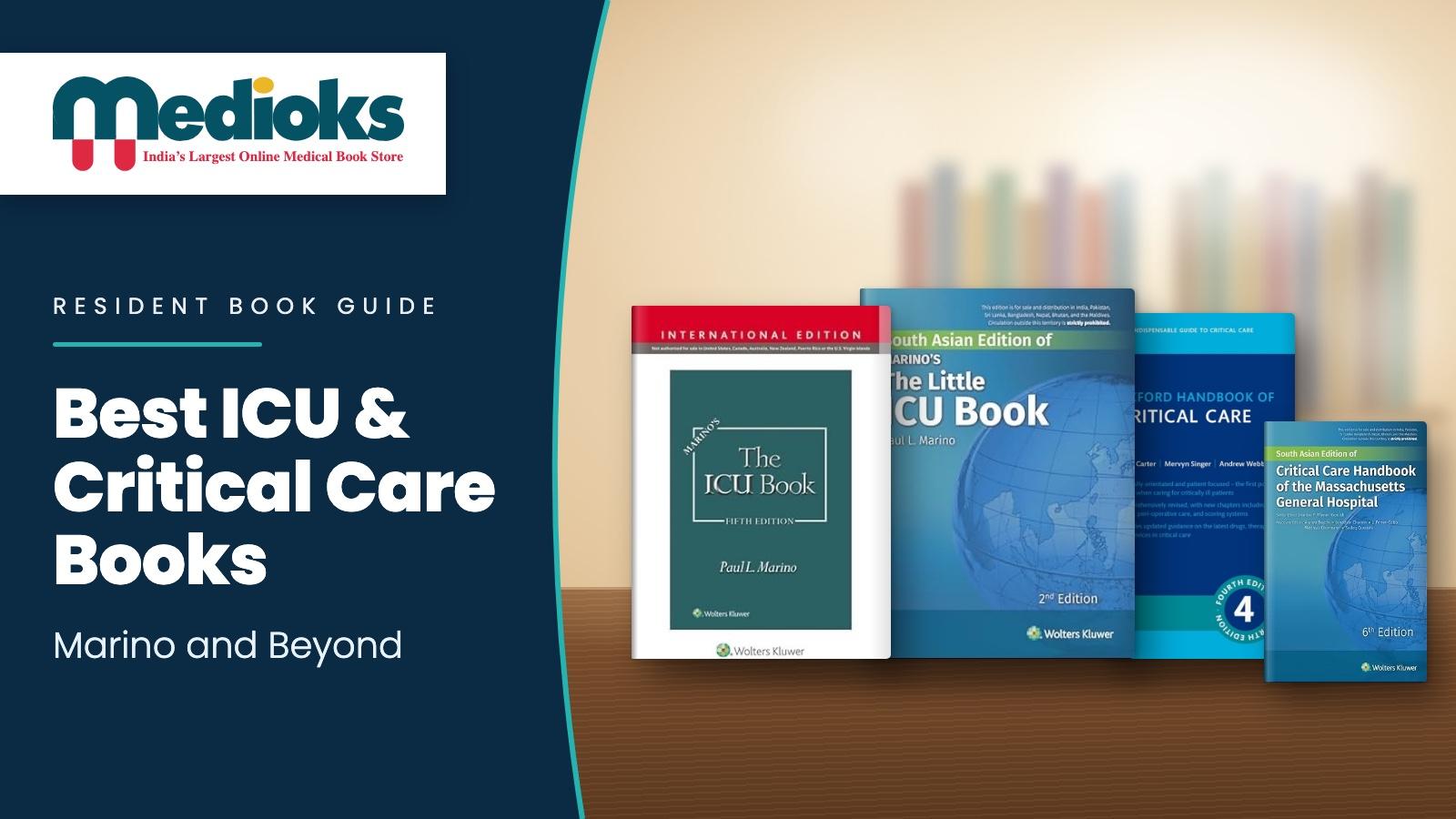
If you’re starting an ICU rotation as an intern or resident, Marino’s The Little ICU Book is the easiest place to start, and Marino’s The ICU Book is the classic full reference. Add a pocket handbook for quick look-ups on the unit. If you’re in anaesthesia or medicine, add a monitoring or drug-focused book.
Critical care is learned at the bedside, but a good book helps you understand why decisions are made: fluids, vasopressors, ventilation, sedation and organ support. This guide compares the main ICU books and explains who each one suits.
Quick answer
- Start here: Marino’s The Little ICU Book (Paul Marino, Samuel Galvagno).
- Full reference: Marino’s The ICU Book.
- Pocket handbooks: Oxford Handbook of Critical Care, or the Critical Care Handbook of the Massachusetts General Hospital.
- ICU drugs: Pharmacotherapeutics in Critical Care (Srinivas Samavedam, Ganshyam Jagathkar).
- Monitoring: Monitoring in Anesthesia and Critical Care (Anjan Trikha, Preet Mohinder Singh).
ICU books compared
| Book | Author / editor | Type | Best for |
|---|---|---|---|
| Marino’s The Little ICU Book | Paul Marino, Samuel Galvagno | Concise book | Interns and junior residents starting in the ICU |
| Marino’s The ICU Book | Paul L. Marino | Full reference | Residents who want the reasoning behind ICU care |
| Oxford Handbook of Critical Care | Andrew Singer, Mervyn Webb and others | Pocket handbook | Quick look-ups on the unit |
| Critical Care Handbook of the Massachusetts General Hospital | Jeanine Wiener-Kronish and others | Pocket handbook | Practical, protocol-style guidance |
| Pharmacotherapeutics in Critical Care | Srinivas Samavedam, Ganshyam Jagathkar | Drug book | Safe use of ICU drugs |
| Monitoring in Anesthesia and Critical Care | Anjan Trikha, Preet Mohinder Singh | Monitoring | Understanding haemodynamic and respiratory monitoring |
Marino’s ICU books
Paul Marino’s books are among the most widely read in critical care because they explain physiology and evidence in plain language.
- Marino’s The Little ICU Book (with Samuel Galvagno) is a condensed version, small enough to carry and short enough to read during a rotation.
- Marino’s The ICU Book is the full text, covering haemodynamic monitoring, shock, fluids, ventilation, sepsis, acid-base disorders, nutrition and more.
Start with the Little ICU Book, and move to the full book when you want more depth on a topic.
Pocket handbooks
- Oxford Handbook of Critical Care fits in a pocket and covers common ICU problems in a structured format.
- Critical Care Handbook of the Massachusetts General Hospital gives practical, protocol-style guidance from a major teaching hospital.
Handbooks are best for quick reminders. Always follow your own ICU’s protocols and senior advice.
Drugs and monitoring
- Pharmacotherapeutics in Critical Care (Srinivas Samavedam and Ganshyam Jagathkar) focuses on drugs used in the ICU, including vasopressors, sedatives, antimicrobials and anticoagulants.
- Monitoring in Anesthesia and Critical Care (Anjan Trikha and Preet Mohinder Singh) explains how monitors work and how to interpret them.
Which book for which stage?
| You are… | Start with |
|---|---|
| an intern rotating through the ICU | Marino’s The Little ICU Book |
| a junior resident in medicine, anaesthesia or emergency medicine | The Little ICU Book, plus a pocket handbook |
| a senior resident or critical care trainee | Marino’s The ICU Book, plus the drug and monitoring books |
| preparing for anaesthesia exams | Your anaesthesia core texts, with Marino for ICU topics |
For anaesthesia textbooks, see our guide to anaesthesia books for MBBS students and residents.
How to learn critical care faster
- Master the basics first: arterial blood gases, fluids, shock types, oxygen therapy and ventilator modes.
- Read about every patient you see. Look up the condition that evening in Marino or a handbook.
- Learn your unit’s protocols for sepsis, ventilation and sedation. They take priority over any book.
- Practise ABG interpretation daily with a fixed step-by-step method.
- Keep a drug card with doses and dilutions of the vasopressors and sedatives your unit uses, and check it against unit guidance.
Core ICU topics to learn first
Critical care is a wide field, but a handful of topics come up every day on most ICUs. Getting these right first makes everything else easier:
| Topic | What to understand |
|---|---|
| Shock | The main types of shock, how to recognise them, and the principles of fluids and vasopressors |
| Sepsis | Early recognition, cultures, early antibiotics and source control, following your unit’s protocol |
| Respiratory failure | Types of respiratory failure, oxygen therapy, non-invasive ventilation and when to intubate |
| Mechanical ventilation | Basic modes, initial settings, and how to respond to alarms and changes in blood gases |
| Arterial blood gases | A step-by-step method for interpreting acid-base and oxygenation |
| Fluids and electrolytes | Fluid choice and balance, and common disorders such as hyponatraemia and hyperkalaemia |
| Sedation and analgesia | Common drugs, sedation scoring, and daily review of sedation needs |
| Acute kidney injury | Causes, monitoring, and when renal replacement therapy is considered |
A simple approach to ABG interpretation
Arterial blood gas interpretation is a daily ICU skill. A consistent step-by-step method avoids mistakes:
- Check oxygenation: look at the oxygen level in relation to the oxygen the patient is receiving.
- Look at the pH: is it acidaemia or alkalaemia?
- Find the primary process: is it respiratory (carbon dioxide) or metabolic (bicarbonate)?
- Check compensation: is the other system compensating as expected, or is there a second disorder?
- For metabolic acidosis, calculate the anion gap to narrow down the cause.
- Link it to the patient: the numbers only make sense alongside the clinical picture.
Practise on every ABG you see, and check your interpretation with a senior until you’re confident.
Your first days in the ICU: practical tips
- Learn the routine: handover times, ward round structure, and how to present a patient system by system.
- Know the protocols: sepsis, ventilation, sedation, glucose and electrolyte replacement protocols are usually written down. Read them early.
- Understand the charts: fluid balance, drug infusions and vital sign trends tell you more than a single reading.
- Ask about every infusion: what it is, why it’s running, and what the target is.
- Escalate early: if something worries you, tell a senior. Nobody expects a new doctor to manage alone.
- Talk to families with care: communication with relatives is a major part of ICU work.
How to present an ICU patient on rounds
Many ICUs present patients system by system. A common structure is:
- one-line summary: age, diagnosis and day of ICU stay,
- neurological status and sedation,
- cardiovascular status and support, such as vasopressors,
- respiratory status and ventilation settings,
- renal function, fluid balance and electrolytes,
- gastrointestinal status and nutrition,
- infection: cultures and antibiotics,
- lines and tubes, and how long they’ve been in, and
- plan for the day and family communication.
Keeping up with critical care evidence
Critical care practice changes as new trials are published, and books can’t always keep pace. Once you know the basics from Marino or a handbook:
- follow your unit’s journal club and teaching sessions,
- read the current guidelines your unit uses, for example on sepsis and ventilation, and
- ask seniors why the unit does things a particular way. Their reasoning often draws on recent evidence.
Critical care as a career
Doctors enter critical care from several backgrounds, including anaesthesia, medicine, respiratory medicine and emergency medicine, and through dedicated critical care training programmes. If you’re interested, spend extra time in the ICU, build strong foundations in physiology and pharmacology, and talk to consultants about the training routes available in your institution.
Mechanical ventilation basics
Ventilators can seem intimidating at first. A few core ideas make them much easier to understand:
- Modes: most modes either deliver a set volume or a set pressure, with varying amounts of support for the patient’s own breaths.
- Key settings: tidal volume or pressure, respiratory rate, the fraction of inspired oxygen (FiO2) and positive end-expiratory pressure (PEEP).
- Monitoring: watch peak and plateau pressures, oxygen saturation, end-tidal carbon dioxide and blood gases.
- Lung-protective ventilation: many units aim for lower tidal volumes based on predicted body weight in patients with lung injury. Follow your unit’s protocol.
- Alarms: learn what common alarms mean, such as high pressure or low volume, and the first checks to make.
- Weaning: daily assessment of whether a patient can breathe with less support.
Marino’s books explain the physiology behind these settings well, which is why they’re so popular with junior doctors.
Infection prevention in the ICU
ICU patients are vulnerable to hospital-acquired infections. Simple, consistent habits protect them:
- hand hygiene before and after every patient contact,
- following bundles for central lines, urinary catheters and ventilated patients,
- reviewing every line and tube daily and removing those no longer needed, and
- using antibiotics carefully and reviewing them when culture results return.
Nutrition and the rest of ICU care
Beyond organ support, good ICU care includes many routine but important tasks that books like Marino’s cover well. These include early nutrition, usually through the gut when possible; preventing blood clots and pressure injuries; managing blood glucose; and early mobilisation and physiotherapy where the patient’s condition allows. Many units use a daily checklist so that none of these is missed. Learning these routines early makes you a more useful member of the team.
Using a pocket handbook well
- check it quickly for a reminder, then read the topic properly that evening,
- annotate it with your unit’s protocols and phone numbers, and
- remember that local protocols take priority over a general handbook.
Frequently asked questions
Which is the best ICU book for beginners?
Marino’s The Little ICU Book is the most common starting point for interns and junior residents.
The Little ICU Book or The ICU Book?
Start with the Little ICU Book. Move to the full ICU Book when you want deeper explanations, usually later in residency.
Is a pocket handbook enough for the ICU?
A handbook is useful for quick reminders, but you need a book like Marino’s to understand the reasoning behind management.
Are ICU books useful for MBBS students?
They’re mainly for interns and residents. MBBS students get enough critical care from their medicine and anaesthesia books. See our books to own before internship guide.
How long does it take to feel comfortable in the ICU?
Most junior doctors feel overwhelmed at first. With a daily routine, protocol knowledge and reading about every patient, most feel much more confident within a few weeks.
Should I memorise ICU drug doses?
Know the common drugs and their effects well, but always check doses against your unit’s protocols and drug references. Memory alone isn’t safe for infusions.
Is Marino’s book good for exam preparation?
It’s excellent for understanding concepts, which helps in exams. For MCQ practice, add question banks or review books for your specific exam.
What’s the difference between the Little ICU Book and the ICU Book?
The Little ICU Book is a condensed version that’s easier to carry and finish during a rotation. The full ICU Book goes deeper into physiology, evidence and management, which suits residents who want more detail.
Do interns need to buy an ICU book?
It’s optional, but many interns find the Little ICU Book helpful during an ICU or medicine rotation. A good medicine textbook covers some critical care basics too.
Which ICU book helps with ventilator settings?
Marino’s books explain ventilation physiology clearly. For practical settings, always follow your unit’s protocols and senior guidance.
Is the Oxford Handbook of Critical Care enough on its own?
It’s a quick reference for the ward. Most residents pair it with a fuller text such as Marino’s for understanding.
The bottom line
Start your ICU reading with Marino’s The Little ICU Book, keep a pocket handbook on the unit, and move to the full ICU Book as your responsibility grows. Add drug and monitoring books if you’re in anaesthesia, medicine or critical care training.
Book recommendations are general guidance and are not clinical advice. Always follow your hospital’s protocols and senior guidance. Editions and availability change, so check the product page for the latest edition. Facts checked on 26 November 2026.